How Torque Between the Drive and the Rolling Stand Becomes a Quality Tool
A European manufacturer of rolled steel profiles uses sensor technology from core sensing to measure torque directly at the drive shafts between the drive and the rolling stand. Plant operators view the readings in real time on a tablet, while the data is simultaneously transmitted via MQTT to the process data system.
Any deviations in machine settings are immediately visible, the setup of new profiles and coils is faster, and torque is now a standard process parameter in quality management.
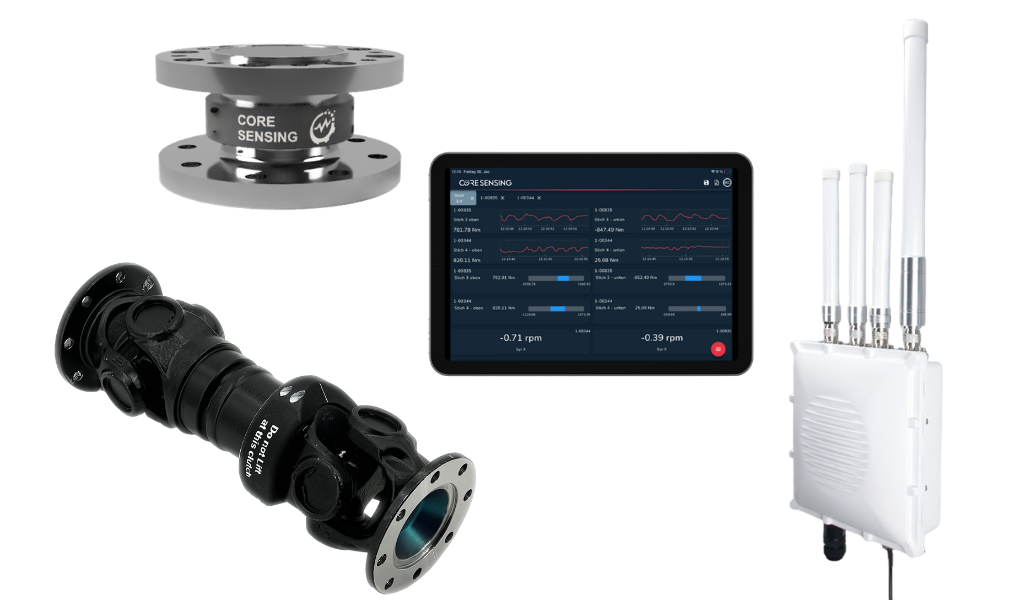
An overview of the measurement system: coreFLANGE torque measurement flange, coreSHAFT drive shaft with integrated sensor, coreVIEWER app on a tablet, and coreGATE Fusion Gateway. Image source: core sensing
Why is the run-in phase in roll forming so prone to errors?
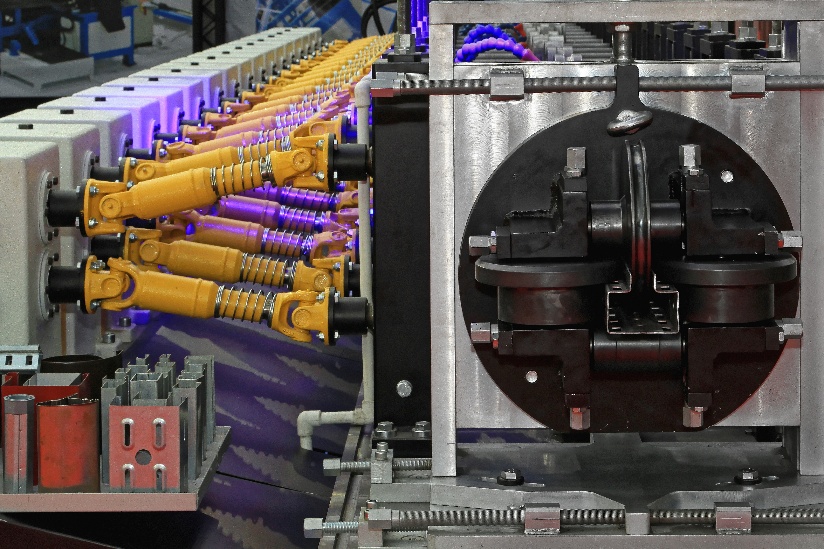
In roll forming, also known as profile rolling, sheet metal is formed into profiles through a series of linked forming stages. The torque transmitted from the drive to the die is a critical process parameter in this process. Without visualization of these forces, the plant operator must rely on experience and the trial-and-error method to determine the correct settings during startup. This takes time, generates scrap, and is heavily dependent on the knowledge of individual operators.
- Less waste. This reduces costs and emissions.
- Faster break-in. Tool and coil changes are faster. Knowledge transfer from experienced employees becomes easier, and less experienced workers are empowered—which helps address the shortage of skilled workers.
- Reliable process data. Reliable data for quality management and digitalization.
- Fewer load peaks. Process optimization during peak loads, which lead to increased tool wear and unnecessary energy consumption.
How can the torque between the drive and the rolling stand be measured?
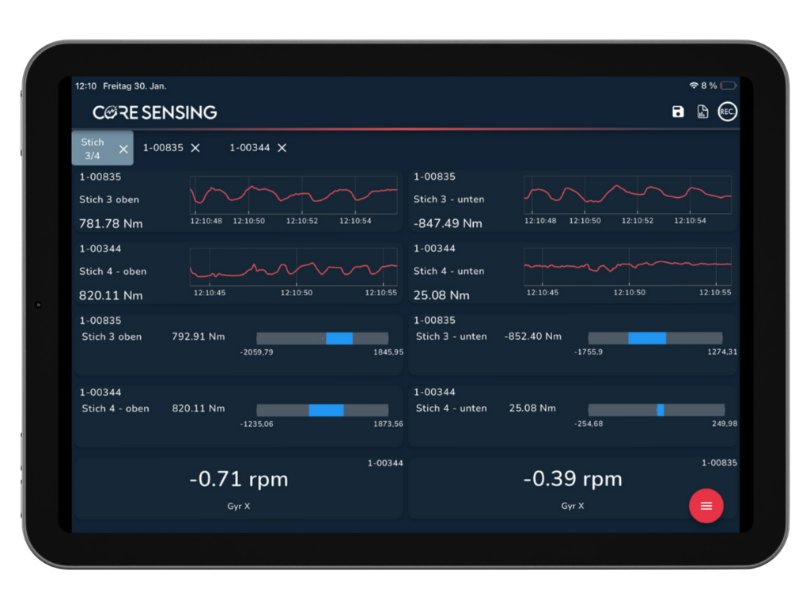
coreVIEWER Live Dashboard with torque data directly on the tablet.
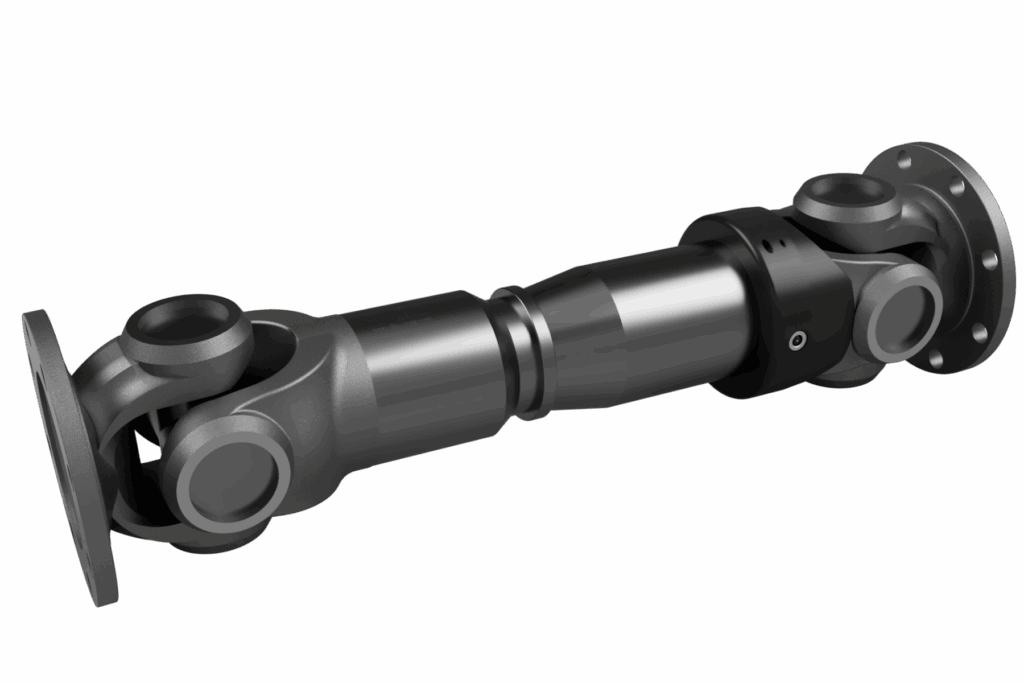
There are two installation options for the measurement. A coreFLANGE torque transducer is installed between the drive and the drive shaft. Alternatively, a coreSHAFT drive shaft—which is mechanically identical and features an integrated sensor—replaces the conventional shaft. In both cases, there is no need for time-consuming modifications or wiring. The sampling rate is configurable and, depending on the settings, ranges from 10 to 500 measurements per second in this application. If required, acceleration and rotational speed are also measured.
- Live on a tablet. Using the free coreVIEWER app, plant operators can view the data in customizable dashboards and use it directly to help with adjustments.
- In the process data system. The measurement data is transmitted via a coreGATE Fusion to the local network using TCP/IP and MQTT for in-depth analysis and condition monitoring.
What are the practical benefits of torque measurement in roll forming?
It became apparent as early as the commissioning phase that the machine settings were not optimal for the profile being processed. In the weeks and months that followed, regular use by the plant operators became established, noticeably shortening the run-in time for new profiles and coils. Torque was incorporated into the process data acquisition system as a relevant process parameter. There are plans to expand this to additional production lines and plants.
“We use sensors and software from core sensing to optimize the rolling profiling process. We were able to gain valuable new insights right from the start. Today, production staff are happy to use the measurement systems frequently because they make their jobs easier. Relying on core sensing’s products has quickly become standard practice for our team.”
Plant Manager at a manufacturer of rolled steel profiles
Technical highlights
The implementation was carried out using coreFLANGE, coreSHAFT, and coreVIEWER.
| Category | Description |
|---|---|
| Measured variables | Torque, optional: speed and acceleration |
| Measurement range | 0…5,000 Nm |
| Sampling rate | Configurable, 10–500 measurements per second |
| Data Transmission | Bluetooth Low Energy (BLE), gateway connection via coreGATE Fusion |
| Interfaces | TCP/IP, MQTT to the local network / process data system |
| Software | coreVIEWER app with customizable dashboards, logging, and export |
| Installation | coreFLANGE between the drive and the drive shaft, or coreSHAFT as an identical replacement shaft |
| Special Features | Wireless measurement; no time-consuming modifications or wiring required |
About the Customer
The customer is a European manufacturer of roll-formed steel profiles. Roll forming is a continuous cold-forming process used to produce precision steel profiles. The company supplies custom-made profiles to the automotive, construction, furniture, household appliance, and mechanical engineering industries, among others.
Do you have a similar application in your production process?
Talk to us about torque measurement on your roll forming line.