Climate change threatens the Arctic - what a sensor reveals about the fragile future of sea ice
The Arctic is changing rapidly. The ice is melting and the sea ice is becoming thinner, more porous and more unpredictable. These changes pose enormous challenges not only for climate research, but also for logistics, infrastructure projects and polar expeditions. How stable is the ice? What structures are hidden beneath the surface? And how can these be reliably measured?
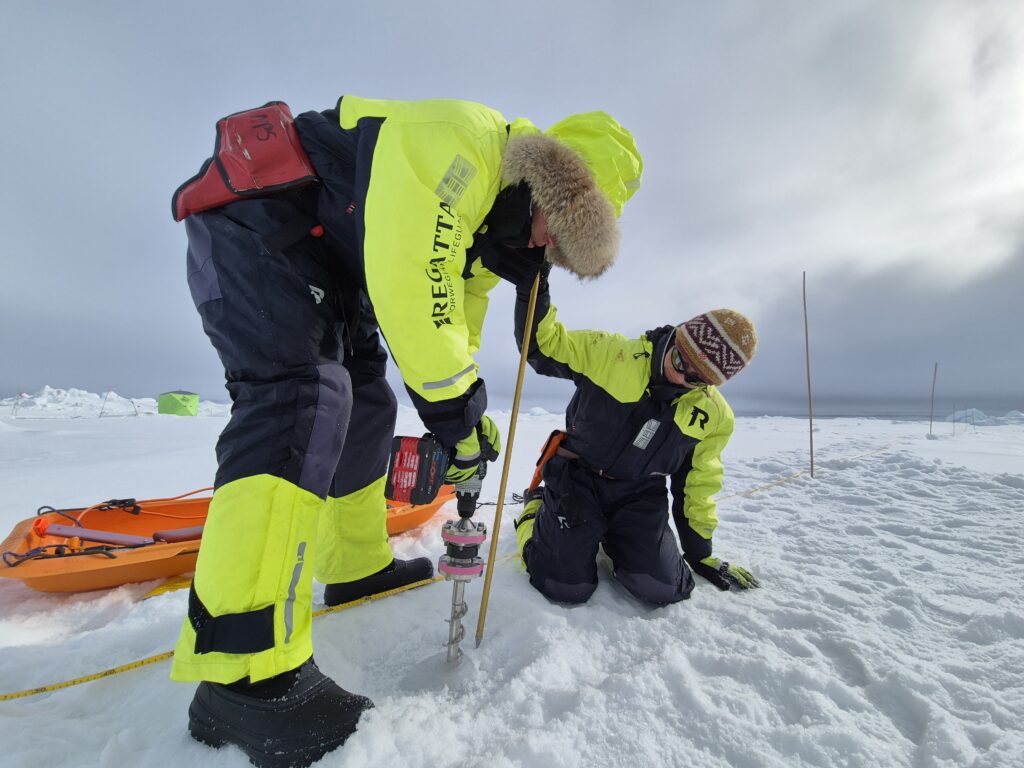
To answer these questions, researchers from the Alfred Wegener Institute (AWI) carried out measurements with the coreFLANGE sensor under extreme conditions on the sea ice around Spitsbergen in March and May 2025. The sensor was used as part of a drill pipe. The aim: the mechanical characterization of the ice at different depths and in particular in so-called press ice ridges, where fragments of ice floes slide over each other.
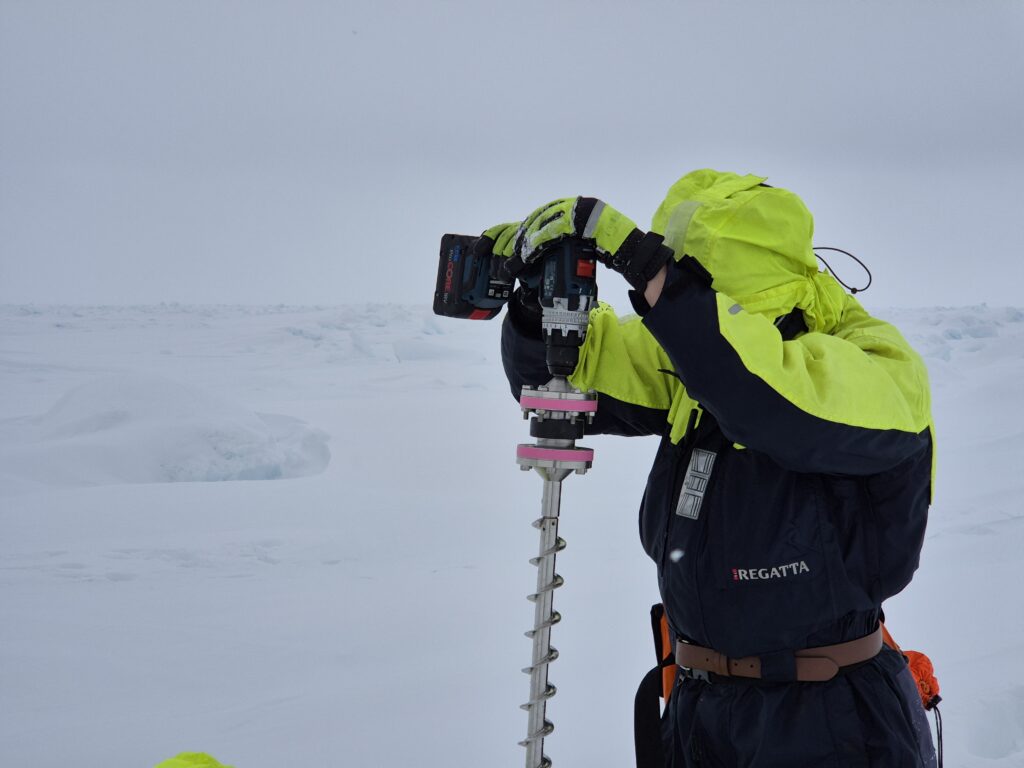
Until now, the structural investigation of press ice ridges has often been purely subjective – based on experience and an assessment of how the drilling process feels. However, the heterogeneity of the ice, for example due to snow cover, cavities or salt content, cannot be recorded with sufficient accuracy in this way. Especially in times of rapid change, a more precise approach is needed that enables more reliable and simpler measurements.
Precise force and torque measurement when drilling into ice with coreFLANGE
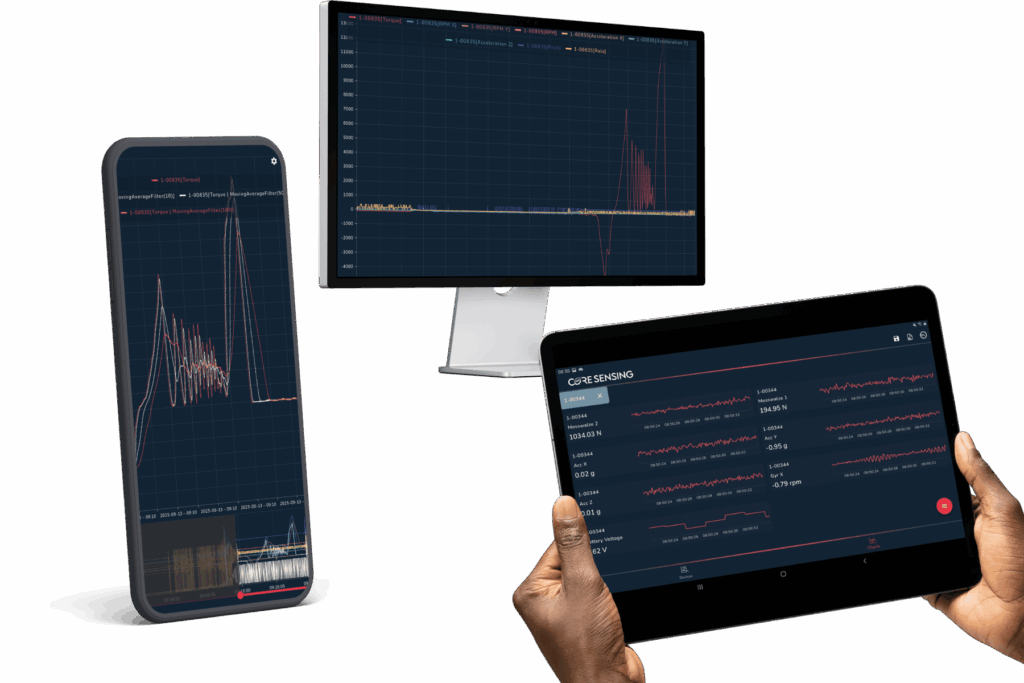
The cF400 version of the coreFLANGE sensor was mounted between the drilling machine and the drill rods and the torque, axial force, temperature, speed and acceleration were measured in three axes. Data was recorded and analyzed in ice up to 5 m thick using the coreVIEWER app.
It is assumed that there is a correlation between the horizontal ice thickness and the physical properties, density, salinity and porosity.
The evaluation of the measurements together with other measurement methods revealed that
- The maximum strength occurs at a depth of 0.35 m and is approx. 16 MPa. The center of the sea ice is approx. 6 times stronger than the surface.
- Ice strength increases with increasing density, while higher porosity significantly reduces it. There is only a weak, not yet clearly verifiable trend for salinity, which needs to be investigated in more detail.
To validate the measurement data, the drillings were repeated on a test object made of ice with cavities of defined porosity, which were also clearly recognizable in the torque curve.
Monitoring is crucial - sensor technology creates trust
The stability of the Arctic ice is a decisive parameter for climate change – both as an indicator and as a source of danger. Reliable statements can only be made with continuous, high-resolution monitoring.
Sensors such as coreFLANGE help to objectively characterize the ice structure, especially in press ice ridges, in a mobile, robust manner and without the need for a complex measurement infrastructure. They replace subjective assessments with reliable data, a decisive step for science, safety and technology in a changing world.
Technical highlights
The implementation was carried out with coreFLANGE and coreVIEWER.
Range | Description |
|---|---|
Measured variables | Torque, speed, acceleration and temperature |
Measuring range | 400 Nm – 10,000 Nm |
Data transmission | Bluetooth Low Energy (BLE) |
Data rate | Up to 1 kSPS |
Interfaces | USB, CAN, RS232/422/485, TCP/IP, MQTT |
Software | Mobile app, dashboard and REST API |
Assembly | Standard flange mounting, customer-specific adaptations possible |
Special features | Wireless measurement, integrated rechargeable battery, monitoring & data logging |